
Outdoor travel destinations and recreation brands are accustomed to planning for seasonal shifts. Weather patterns change. Demand fluctuates. Peak periods and shoulder seasons are predictable parts of the business.
But not every disruption is seasonal.
Political cycles, major events, and shifts in consumer sentiment can reshape consumer behavior almost overnight. Some of these shifts can be anticipated and planned for. Others emerge quickly and place brands under heightened scrutiny in real time.
For outdoor recreation brands, destinations, attractions, and experience-driven businesses, the challenge is not simply reacting to these moments. It is building a strategy that allows the organization to remain steady, relevant, and aligned while consumer attention and expectations shift around them.

How Consumer Attention Changes During Major Events
Large-scale events fundamentally change how audiences consume information and experiences.
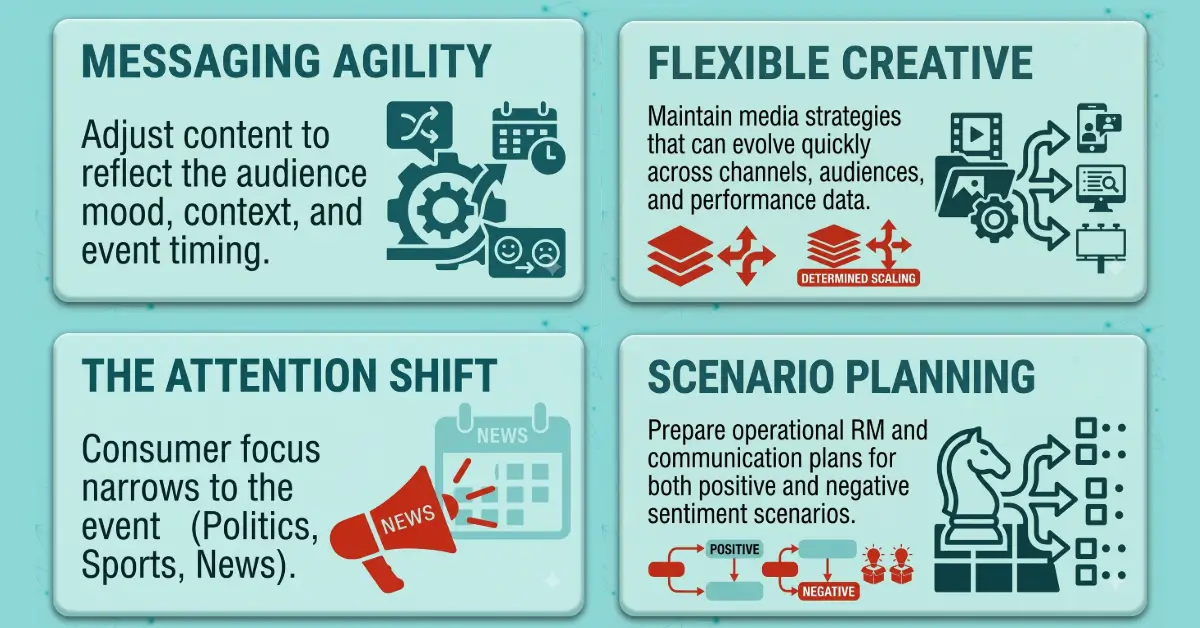
During moments like the World Cup, March Madness, the Olympics, or contentious election cycles, consumer attention narrows. Audiences become highly focused on the event experience itself, and brand expectations shift alongside that focus.
For example, communities hosting major sporting events or large-scale public gatherings may see demand surge around fan experiences, hospitality, entertainment, retail activity, and outdoor recreation opportunities. Sentiment can change quickly depending on outcomes, crowd dynamics, or tensions surrounding the event.
Brands that prepare for multiple audience scenarios are better positioned to maintain a positive customer experience regardless of the outcome.
That preparation may include:
- Adjusting messaging based on audience mood and event timing
- Creating activations or experiences that appeal to multiple audience segments
- Preparing operational and communication plans for both positive and negative sentiment
- Maintaining flexible creative and media strategies that can evolve quickly
The most effective event-driven marketing strategies do not rely on a single narrative. They prepare for a range of emotional responses and audience behaviors.
Major Events Also Reshape the Marketing Landscape
High-profile events create opportunity, but they also create intense competition.
Advertising inventory becomes more expensive. Sponsorship demand increases. Influencer partnerships tighten. Earned media becomes harder to secure as more brands compete for visibility at the same moment.
For brands operating in outdoor recreation, tourism, and experiential industries, this requires disciplined decision-making and strong brand governance.
The question is not simply whether a brand should participate in a major event or period of heightened public attention. The more important question is whether the investment aligns with long-term brand and business goals.
Leaders should evaluate:
- Whether increased media and sponsorship costs are justified by projected return
- How pricing, attendance, or customer experience may be affected during demand spikes
- Whether operations can support increased visibility and engagement
- How short-term attention aligns with long-term brand perception
Major events can create outsized visibility for brands that execute strategically. Contextual targeting and event-adjacent media placements can significantly increase attention and brand recall when audiences are highly engaged.
But visibility without alignment can create unnecessary brand risk.
Flexible media strategy becomes especially important during periods of heightened public attention. Brands that maintain some level of budget agility can adjust messaging, placements, creative emphasis, or geographic focus as audience behavior shifts in real time.
Contextual targeting can also help brands align messaging with relevant consumer interests and event-driven behavior without over relying on sensitive audience targeting. At the same time, brands should review keyword exclusions, publisher controls, and brand safety settings to reduce the risk of appearing alongside divisive or controversial content during politically sensitive periods.
The brands that navigate these moments most effectively are often the ones balancing visibility with control — staying present in the conversation without compromising long-term brand equity.
Brand Tone Matters During Politically Charged Periods
Political cycles create a different type of marketplace pressure.
Consumer expectations become more emotionally charged. Audience interpretation becomes more polarized. Even brands attempting to remain neutral can find themselves pulled into broader public conversations.
For outdoor recreation and travel-related brands, consistency matters more than reaction.
Many outdoor recreation and travel-related brands do not have the margin for error that larger national advertisers possess. A prolonged decline in visitation, participation, or audience trust can take significant time and investment to rebuild.
That is why leadership teams should establish clear brand governance policies before politically sensitive periods occur.
Key questions should include:
- What role, if any, should the brand play in public conversations?
- What topics fall outside the organization’s brand purpose?
- How should social, PR, customer service, and leadership teams respond if controversy emerges?
- What escalation process exists for high-risk communications decisions?
Brands should also define in advance who has decision-making authority during high-scrutiny periods. Delayed approvals, inconsistent messaging, or reactive responses across teams can create larger reputational issues than the original event itself.
For brands that position themselves as apolitical, consistency is critical. Sudden shifts in tone or messaging during politically charged periods can create confusion, erode trust, and alienate segments of the audience.
Not Every Moment Requires a Brand Response
In the social media era, brands are often pressured to respond immediately to trending conversations, viral moments, or public controversy. But for many outdoor recreation and travel-related brands, restraint is often the more strategic decision.
Long-term brand value is built through consistency, trust, and reliability — not short-term attention.
Brands should remain aware of audience behavior and changes in consumer sentiment. But reacting impulsively to every trending moment can dilute positioning and create operational distractions.
This is especially important for brands that rely on repeat visitation, seasonal loyalty, community perception, and long-term customer relationships.
The brands that navigate periods of heightened public attention most effectively are often the ones that remain steady while competitors overreact.
Cross-Functional Coordination Is Essential
Marketing teams cannot navigate these moments alone.
Periods of heightened visibility or scrutiny require close coordination between:
- Marketing
- Operations
- Executive leadership
- Public relations
- Community partnerships
- Customer experience teams
Alignment becomes especially important when brands face emotionally charged audience reactions, sudden demand shifts, or public scrutiny tied to political cycles or major events.
Without cross-functional coordination, messaging and operational realities can quickly become disconnected.
Planning Must Happen Before the Moment Arrives
The strongest brands prepare long before major events or election cycles occur.
That preparation should ideally begin 12 months or more in advance for predictable events. Teams should establish communication frameworks, escalation plans, media strategies, operational contingencies, and decision-making processes well before public attention intensifies.
There will always be opportunities to capitalize on real-time moments. But the organizations best equipped to do so successfully are the ones that already have alignment in place.
Prepared brands do not simply react to shifts in consumer sentiment.
They lead through them.