

Growth is usually framed as a question of doing more: reaching more people, generating more leads, driving more conversions, or capturing more market share. And when growth begins to slow, the natural response is often to optimize. Marketers refine the media mix, improve targeting, adjust messaging, and look for more efficient ways to convert the customers already showing interest.
Those efforts matter. But they can only go so far if the underlying pool of potential customers isn’t growing.
For brands operating in mature or participation-based categories, that can create a difficult challenge. When the number of people entering the category remains relatively unchanged, growth increasingly depends on competing for a larger share of the same pool of customers rather than expanding the pool itself.
That raises a different kind of growth question:
What if the next opportunity isn’t to compete harder for the customers already in your category, but to create new ones?
Creating new demand isn’t necessarily the easiest or most efficient path to growth. People already considering a category will naturally be easier to convert than those who aren’t. But when the existing pool isn’t expanding, efficiency alone can’t solve the growth problem.
The opportunity may lie among people who aren’t customers today but share meaningful connections with those who are, whether through their behaviors, motivations, or the types of experiences they choose to pursue. Identifying those connections is the first step toward understanding where new growth might come from.
Finding the Connection
The most obvious adjacent audience isn’t always the best one. A shared interest can provide a starting point, but identifying a credible source of growth requires understanding what makes someone likely to cross from one category into another.
We recently put that thinking into practice with Scuba Diving International. Faced with the challenge of growing participation in a mature category, we explored audiences outside of scuba that might have a natural propensity to become divers. Rather than starting with a predetermined audience, we started with the people already participating in the category and worked outward.
That process considered four dimensions of audience opportunity.
Behavioral Overlap: Follow What People Already Do
Behavioral overlap looks at the activities, interests, and experiences your existing customers already participate in outside of your category. Rather than starting with assumptions about who might make a good new customer, existing behavior can provide clues about where meaningful connections may already exist.
For SDI, we started by building a demographic profile of scuba participants and then compared their participation across a range of other recreational activities. We looked for activities that scuba divers were disproportionately likely to participate in, helping us understand where behavioral connections existed beyond diving itself.
What we found was broader than expected. Scuba divers were more likely to participate in nearly all of the recreational activities we examined. Rather than pointing immediately to one obvious adjacent audience, the finding told us something important about scuba divers themselves: they weren’t defined by a single recreational interest. They tended to be active consumers with diverse interests and a willingness to participate across experiences.
That insight expanded the opportunity, but it also created a challenge. If scuba divers participate in everything from skiing to paddleboarding to cycling, behavioral overlap alone isn’t enough to determine which audience represents the strongest opportunity for growth.
We needed to understand what was driving those connections.
Psychographic Alignment: Understand What Drives Participation
Knowing what people do is only part of the picture. To narrow the field, we needed to understand why they do it. Psychographics can reveal the attitudes, motivations, and values behind a behavior, providing another way to evaluate whether an audience’s connection to a category goes deeper than a shared interest.
For SDI, we analyzed the psychographic profile of scuba divers and looked for patterns in the attitudes and motivations that distinguished them from the broader population. Several themes emerged. They were drawn to excitement and experiences that pushed their boundaries, valued the challenge of developing and mastering new skills, gravitated toward activities that helped distinguish them from others, and viewed their interests as a form of personal expression.
We then looked for those same themes among participants in the other activities we were evaluating. This helped us distinguish activities that simply shared participants with scuba from those that appeared to fulfill similar underlying motivations.
Behavioral overlap told us where connections existed. Psychographic alignment helped us understand which of those connections might actually matter. Shared motivations gave us a stronger reason to believe that someone drawn to one activity could also be receptive to another. But shared behaviors and motivations were still only part of the equation. We also needed to understand how much the activities themselves had in common.
Structural Similarity: Look at What the Activities Require
Structural similarity examines the characteristics of participation itself. What does an activity ask of someone, and how much of that experience might already feel familiar when they enter a new category?
For SDI, we evaluated potential activities across four characteristics: whether they were water-based, equipment-based, involved controlled risk, and were connected to outdoor or destination experiences. Each represented an element of the scuba experience that could influence how familiar or unfamiliar scuba might feel to someone coming from another activity.
The value wasn’t necessarily in finding an activity that checked every box. Instead, the exercise broadened our understanding of what could make an activity structurally relevant to scuba. Some of the strongest connections were expected, particularly among water-based activities such as surfing, kayaking, and sailing. But others emerged from activities with no direct connection to water. Skiing, mountain biking, and rock climbing, for example, shared other characteristics such as specialized equipment, controlled risk, and destination-based participation.
That was an important finding. An adjacent audience didn’t need to participate in something that looked like scuba. They needed enough familiarity with the characteristics of the experience to make scuba feel less foreign.
With a stronger field of potential audiences emerging, the next question became which of those opportunities had the potential to drive meaningful growth
Scalable Growth Impact: Determine Whether the Opportunity Can Matter
The final consideration was whether an audience represented enough potential to make it a meaningful source of growth. That meant looking at the size of the audience, where they were concentrated, whether they could be efficiently reached through media, and whether the business had the infrastructure to support them if they converted. An audience can look ideal on paper but have limited value if it is too small, difficult to identify, geographically disconnected from the product or service, or costly to reach at meaningful scale.
For SDI, this meant evaluating the remaining opportunities against the realities of the business. We looked at the size and concentration of each audience alongside factors such as existing scuba participation, certification activity, and access to dive centers in the markets where those potential customers lived. We also considered whether the audience could be clearly identified and reached through available media platforms.
This final layer helped distinguish an interesting audience from an actionable one. Some activities showed strong connections to scuba but represented a more limited potential customer pool. Others offered greater scale but weaker alignment. The strongest opportunities were those that could balance both: a credible reason to believe the audience could enter the category and enough scale to make pursuing them meaningful.

From Analysis to Opportunity
Across the analysis, no single data point identified the answer. Instead, the opportunity became clearer as the different pieces came together.
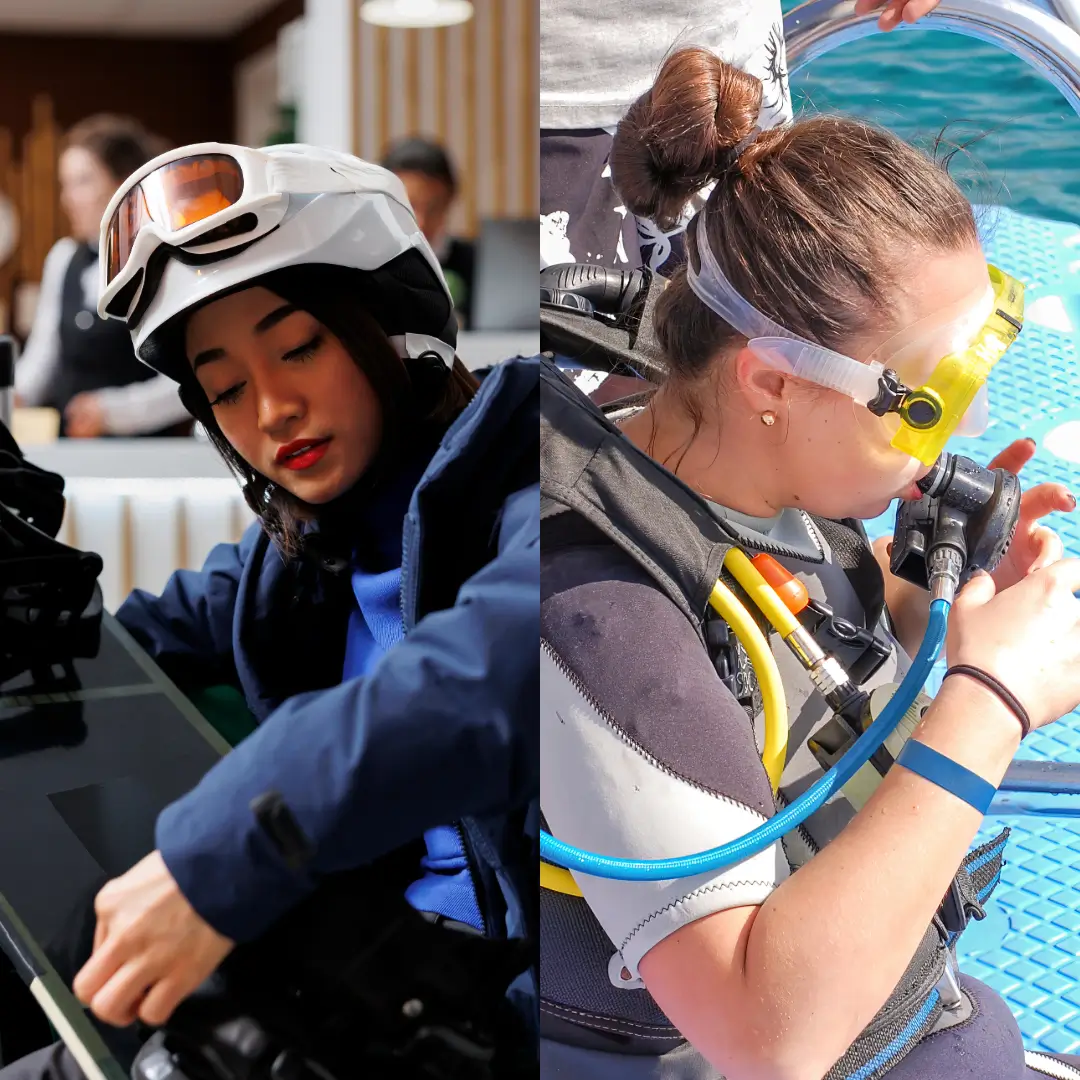
For SDI, skiers and snowboarders stood out not simply because they shared characteristics with scuba divers, but because the connection held up across multiple dimensions. They participated in other active experiences, shared motivations around challenge, mastery and adventure, were already comfortable with specialized equipment and controlled risk, and represented a sizable audience that could be identified and reached through media.
There was also something less tangible but equally important: scuba made sense as an extension of the lifestyle they had already chosen. We weren’t asking someone who preferred passive recreation to suddenly embrace an equipment-intensive adventure activity. We were introducing a new experience to people who had already demonstrated an appetite for many of the things scuba offers.
That gave us a hypothesis worth testing: Could we introduce scuba to skiers and snowboarders not as something completely new, but as another way to pursue the experiences they already valued?
And that is ultimately the role of adjacent-audience research. It doesn’t tell you with certainty who your next customer will be. It gives you an evidence-based reason to believe where your next customer might come from, and a hypothesis you can take into market and test.
Frequently Asked Questions
1. What is an adjacent audience in marketing?
An adjacent audience is a group of potential customers who don’t currently participate in or purchase from a category but share meaningful characteristics with existing customers. These connections may include behaviors, motivations, interests, or familiarity with similar experiences. Identifying adjacent audiences can help brands expand beyond their existing customer base and uncover new sources of growth.
2. How can brands identify new audiences for growth?
Brands can start by examining the characteristics of their existing customers and looking for connections to people outside their category. This may involve analyzing behavioral overlap, psychographic alignment, structural similarities between experiences, and the potential size and accessibility of each audience. The goal is to identify people who have a credible reason to consider entering the category, even if they aren’t currently interested in it.
3. What is the difference between demand creation and demand capture?
Demand capture focuses on converting people who are already interested in a product, service, or category. Demand creation focuses on introducing new people to a category and giving them a reason to consider it. While demand capture can deliver more immediate results, demand creation can help expand the potential customer pool and support longer-term growth.
4. Why is psychographic research important when identifying new customers?
Demographics help describe who customers are, while psychographics provide insight into what motivates them. Understanding attitudes, values, and motivations can reveal connections between audiences that may not be obvious from demographic or behavioral data alone. These insights can help marketers identify new audiences with similar underlying reasons for participating in different categories.
5. How can marketers determine whether an adjacent audience is worth pursuing?
A promising adjacent audience needs more than a strong connection to existing customers. Marketers should also consider audience size, geographic concentration, the ability to reach the audience through media, and whether the business can support new customers. Combining audience fit with commercial potential helps identify opportunities that are both strategically relevant and scalable.