
A weekend forecast can quickly become a high-attention moment for attraction marketers. Rain may soften near-term ticket sales, while clear skies and favorable temperatures can create sudden demand spikes. In either direction, weather often raises the same question: should media strategy change too?
For some attractions—particularly limited-run events, festivals, or seasonal experiences—weather can carry meaningful business implications. For others that operate year-round, it may be more of a short-term variable than a defining concern. But across categories, weather can influence when consumers decide to visit.
The challenge is that weather is often viewed only as a threat to demand. In reality, it more commonly changes when demand converts—and in some cases, can accelerate it altogether. Understanding that distinction is critical, because while forecasts shift quickly, media performance tends to operate on a longer timeline.
Weather Often Shapes Timing More Than Intent
When weather enters the forecast, the first signals marketers often notice are immediate ones: softer ticket sales during rain threats, lower short-term web conversion, or stronger demand when conditions look ideal. Those indicators are real—but they do not always tell the full story. In many cases, they reflect shifts in decision timing more than changes in overall interest.
That distinction matters because many attraction visits are not purely impulse purchases. Families often coordinate schedules, evaluate budgets, compare options, and choose dates in advance. A trip to a zoo, amusement park, festival, or seasonal event is frequently part of a planned weekend rather than a same-day decision. By the time weather becomes a factor, interest may already exist.
When conditions turn unfavorable, consumers often adjust rather than abandon those plans. They may wait to purchase until the forecast becomes clearer, shift to the following weekend, or choose a later operating date that feels more predictable. For attractions with multiple future opportunities to visit, poor weather can suppress near-term conversions while preserving future demand.
The reverse can also be true. Strong weather conditions—sunny skies, comfortable temperatures, or a favorable weekend forecast—can accelerate decisions that were already under consideration. Consumers who were undecided may commit faster when the experience feels easier, more enjoyable, and worth acting on now.
This is one reason weather can be misread in performance reporting. If marketers focus only on immediate transaction data, it may appear that interest has suddenly weakened—or unexpectedly surged. In reality, some of that movement reflects consumers responding to timing cues rather than dramatic changes in demand itself.
Of course, weather sensitivity is not equal across all attraction types. A limited-run festival or short seasonal event has fewer opportunities to recover attendance, making each disrupted or high-opportunity weekend more consequential. An always-on attraction or longer operating season typically has greater flexibility to absorb delayed visitation or benefit from future favorable conditions.
The strategic takeaway is not that weather always hurts or helps demand. It is that weather often influences when consumers act. For many outdoor attractions, forecasts shape timing more than underlying interest—and that difference should shape how marketers evaluate performance and respond with media.
Reactive Media Swings Can Create Hidden Costs
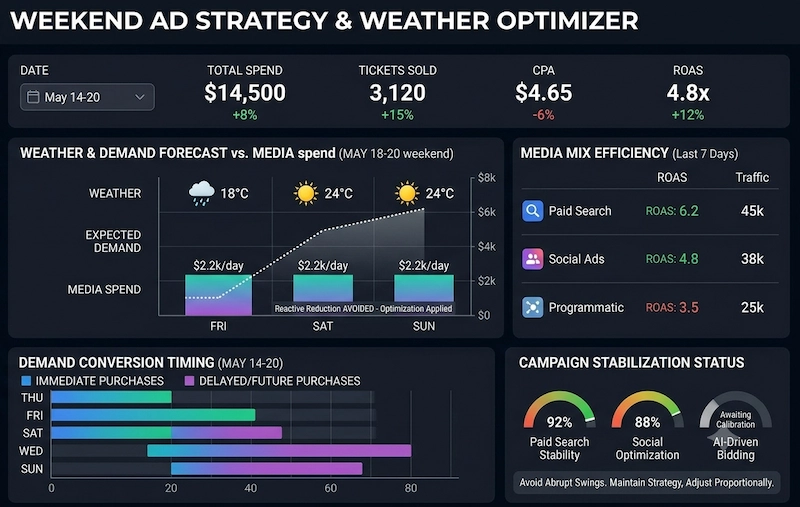
When weather shifts demand signals, changing media investment can feel like the most responsible move. During poor conditions, marketers may look to reduce spend and protect efficiency. During strong forecast periods, the instinct may be to quickly increase budgets and chase demand. In both cases, media often becomes one of the fastest levers available.
The challenge is that paid media rarely performs like a faucet that can be turned up or down without consequence. Search, social, and AI-driven performance campaigns optimize over time using historical performance, audience signals, bidding patterns, and conversion behavior. Abrupt swings in spend can disrupt that momentum, creating inefficiencies when campaigns need to stabilize again.
There is also an opportunity cost to overreacting. Pulling back too aggressively during poor weather may reduce visibility while consumers continue researching future visits. Ramping up too late during favorable conditions may miss a surge in high-intent demand already forming. In both scenarios, delayed or exaggerated responses can weaken overall performance.
This does not mean budgets should remain static. It means measured optimization usually outperforms dramatic shifts. During softer periods, marketers may lower conversion pressure, prioritize high-intent audiences, or shift messaging toward flexibility and future dates. During favorable windows, they may increase retargeting, emphasize urgency, or lean into creative that highlights ideal visiting conditions.
The goal is not to avoid change. It is to respond proportionally—preserving efficiency while staying aligned with how consumer demand is actually moving.
Not All Channels Should Respond the Same Way
Weather and media planning should begin with a simple reality: not every channel is designed to accomplish the same job. Some media channels are built to create future demand, some are intended to capture existing demand, and others can flex between the two. Because of that, they should not all respond identically when conditions change.
Awareness-focused channels are designed to build familiarity, consideration, and future visitation over time. These placements are typically less dependent on same-day purchase behavior and more valuable for maintaining market presence across an entire season or operating window. A rainy weekend may soften immediate attendance, but it does not eliminate the need to remain visible for future dates. The same logic applies during favorable weather periods, when stronger demand can be amplified by brands that have already built awareness.
Conversion-focused channels tend to be more sensitive to short-term shifts in consumer behavior because they sit closer to the point of purchase. When demand softens, these are often the right areas for measured adjustments such as moderating budget pressure, prioritizing higher-intent audiences, or refining pacing. When conditions improve, they can also be among the fastest channels to capture returning demand.
Then there are flexible mid-funnel channels that can support both awareness and conversion depending on how they are structured. These environments are often useful during changing weather conditions because they allow marketers to shift audience strategy, rotate messaging quickly, and balance near-term performance with longer-term demand generation.
The strategic mistake is assuming every part of the media mix should rise or fall together. Some channels are better suited for stability. Others are better suited for responsiveness. The strongest plans understand the role each channel plays and adjust accordingly.
Weather should influence how channels are managed—not trigger a blanket reaction across the entire mix.

A Smarter Framework for Weather Response
Not every forecast deserves the same reaction. A passing shower is different from a multi-day washout, and a rainy Tuesday carries different implications than storms over a peak Saturday. The goal is not to respond to weather itself, but to the likely business impact it creates.
For short-term or uncertain conditions, restraint is often the smartest move. Maintain campaign structure, keep awareness efforts stable, and avoid reacting to forecast noise that may quickly change. Many consumers are still planning future visits, and over-adjusting to a shifting forecast can create unnecessary disruption.
For sustained severe weather—especially during key operating windows—a more active response may be warranted. This can include reallocating spend toward the most efficient demand channels, reducing emphasis on immediate attendance, and shifting messaging toward flexibility, future dates, or policies that lower purchase hesitation. The objective is to adapt to softer near-term demand without disappearing from market.
Then comes one of the most overlooked opportunities: the recovery period. Once conditions improve, postponed intent can return quickly. This is often the right moment to re-engage recent visitors, strengthen retargeting efforts, and capture demand that was delayed rather than lost.
Favorable weather can create opportunity as well. Strong weekend forecasts, ideal temperatures, or holiday timing may accelerate consumer decisions and increase near-term demand. In those moments, marketers who can respond quickly may be positioned to capture incremental visitation.
Ultimately, the same forecast can mean very different things depending on the business. Limited-run attractions may need to respond more actively, while always-on destinations may benefit from greater patience. The strongest strategies evaluate weather through context—not in isolation.
Conclusion
Weather will always influence outdoor attractions. But it should not automatically dictate media decisions.
The strongest marketers understand that forecasts rarely tell the full demand story. Poor conditions may delay visits. Favorable conditions may accelerate them. In both cases, weather is often less about changing consumer interest and more about changing consumer timing.
That is why the smartest response is rarely the most reactive one. It is measured, channel-aware, and grounded in likely business impact rather than short-term emotion.
Weather is not a stop signal. It is a market signal. Brands that interpret it best will be better positioned to capture demand as it changes.
Frequently Asked Questions
Should attractions pause advertising during bad weather?
Usually not entirely. Strategic adjustments often outperform full pauses.
Can good weather increase demand for attractions?
Yes. Favorable forecasts can accelerate consumer timing and increase visitation intent.
Which media channels are most weather-sensitive?
Channels closest to conversion often respond fastest to short-term demand changes.
How should seasonal attractions respond differently?
Limited-run attractions may need more active adjustments due to fewer recovery dates.